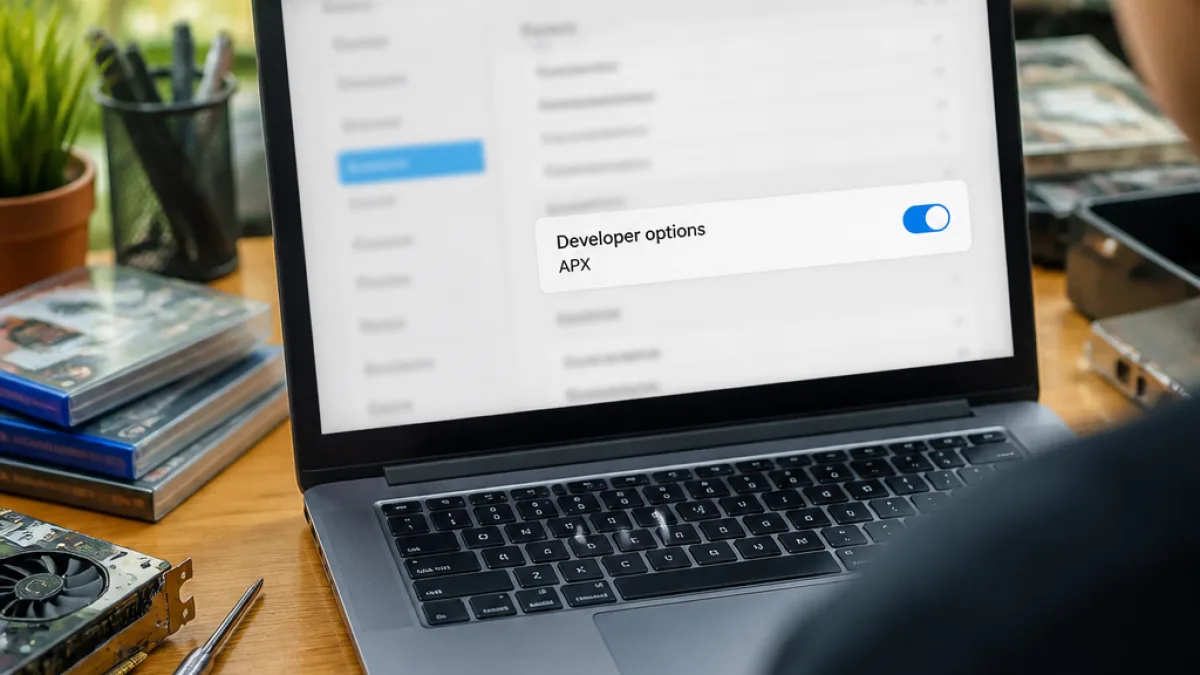
Microsoft’s Windows 11 experimental builds now include a toggle that appears to let users enable Intel APX, the forthcoming instruction‑set extension expected to ship with Intel’s Nova Lake processors. The switch was discovered in the OS Developer options by longtime Windows Insider Xeno (@XenoPanther on X), drawing attention to Microsoft’s early work to prepare Windows for Intel’s next CPU family.
What APX is and why Windows must handle it
Intel calls APX “Advanced Performance Extensions.” One of the most notable changes APX introduces is a doubling of the number of general‑purpose registers (GPRs) from 16 to 32, a change that gives compilers more register space to keep data close to the CPU rather than shuttling it to memory. APX also adds a suite of extra instructions aimed at improving performance in targeted workloads.
- APX: Advanced Performance Extensions — doubles GPRs from 16 to 32.
- Debut platform — expected to arrive with Intel Nova Lake, branded as Core Ultra 4000.
- Windows placement — toggle found under Developer options in an Experimental Windows 11 build.
The Developer options toggle suggests Microsoft is preparing operating‑system support for APX’s additional architectural register state. Instruction‑set extensions typically expose supported capabilities via CPUID and let the OS handle context and state management transparently; historically, users have not needed to flip a switch for AVX or TSX. The presence of an opt‑in control in Windows’ Experimental channel raises questions about whether Microsoft plans to require explicit user consent for APX state management or whether the toggle is a temporary tool for testing in Insider builds.
What this means for PC users and gamers in the Philippines
For builders, gamers and creators in the Philippines, APX matters because instruction‑set extensions can change how compilers and software use CPU resources. If APX delivers the expected gains, games and creative applications compiled to use the extension could see improved throughput on Nova Lake chips. However, APX is not yet shipping in any processors and the Windows toggle in Experimental builds does not currently do anything on shipping hardware.
Microsoft’s approach will influence how smoothly APX arrives for users: the operating system must manage the new register state for context switches, virtualization and exception handling. How Microsoft exposes or hides that complexity will affect drivers, virtual machines and development workflows that matter to local PC builders and esports participants.
| feature | detail from report |
|---|---|
| toggle location | Developer options in Windows 11 Experimental build (spotted by Xeno/@XenoPanther) |
| APX change | GPRs doubled from 16 to 32; new instructions for targeted workloads |
| target CPUs | Intel Nova Lake / Core Ultra 4000 series |
Intel’s Nova Lake platform, which HotHardware identifies with the Core Ultra 4000 brand, has not shipped at the time this toggle was spotted. Because APX is tied to future silicon, Microsoft’s toggle currently functions as a placeholder in Insider builds and may evolve before any general rollout of Windows support.
Microsoft has historically detected instruction support via CPUID and enabled OS handling automatically; exposing APX as a user option would be an unusual departure. Possible reasons include providing a testing surface for developers, giving users control over experimental or stability‑related behavior, or offering a way to opt in while software and drivers mature.
For now, Windows users in the Philippines and elsewhere should consider this an early sign that the OS is being prepared for Intel’s next architecture rather than a finished consumer feature. APX’s benefits will depend on compiler and application support, Intel’s final silicon, and how Microsoft implements register‑state management in released Windows builds.